
Choosing a new garage door isn’t just about finding a style you like in a catalog. In Illinois, whatever material you pick will be tested by freeze-thaw cycles, seasonal humidity, and temperature swings that push exterior materials hard. Make the wrong call and you’ll be dealing with warped panels, rust streaks, or heat loss driving up your energy bills. Get it right and you’ve got a door that holds up, looks great, and adds genuine value to your home.
This guide walks through all the major garage door materials available to Illinois homeowners, explains how each performs under local conditions, and helps you figure out what makes sense for your situation. When you’re ready to move forward, our garage door installation team at Overhead Garage Door, Inc. is here to help.
Why Illinois Weather Demands a Smart Garage Door Material Choice
Illinois is not a forgiving climate for exterior building materials. The state sees dramatic seasonal swings, with freezing conditions running from October through April and summers that bring sustained humidity averaging around 69%. Any garage door you install will spend decades expanding and contracting with those shifts. That mechanical stress is one of the biggest drivers behind premature wear, misalignment, and seal failures.
The Climate Challenge
Chicagoland winters bring more than just cold. There’s road salt spray, snowmelt runoff, and freezing rain that works its way into every gap and surface crack. Repeated freeze-thaw cycles accelerate material degradation across every door type.
Then summers arrive with humidity that can cause certain materials to swell, warp, or delaminate. A garage door material that performs fine in a mild climate can fail quickly here. Looking at how a material handles both extremes is the only responsible approach.
How Lake County Conditions Affect Your Decision
Communities in Lake County, including Libertyville, Waukegan, Highland Park, and Lake Forest, sit close enough to Lake Michigan to experience elevated humidity and salt-air exposure on top of already difficult winter conditions. That proximity increases corrosion risk compared to inland areas, adding an extra layer to consider when evaluating materials sensitive to moisture absorption or surface corrosion.
Homeowners throughout these communities also tend to care about curb appeal, given the mix of established neighborhoods and higher-end residential areas across the region. The right garage door material isn’t purely a durability question. It also needs to complement your home’s style and hold its appearance over time.
Steel Garage Doors: The Go-To Choice for Most Illinois Homeowners
Steel consistently tops the list when Illinois homeowners compare garage door materials. It offers structural durability, design flexibility, and insulation compatibility that few alternatives can match. It’s available across a wide range of price points and holds up well in the conditions Chicagoland delivers every winter.
Insulation and Performance Through Midwest Winters
One of the strongest arguments for steel in Illinois is how well it works with high-quality insulation. Insulated steel doors feature either polystyrene or polyurethane foam cores sandwiched between inner and outer steel skins. Polyurethane-insulated doors deliver excellent thermal performance, reaching R-values in the R-12 to R-18 range recommended for attached garages in cold climates. The Chicagoland area falls primarily in USDA Hardiness Zone 6a. That foam core also adds structural rigidity that resists denting and panel flex.
For homes with attached or heated garages, an insulated steel door meaningfully cuts heat loss during winter months. Steel also holds its shape through repeated freeze-thaw cycles better than most materials, which is a real advantage in this part of the country.
Rust Risk and Long-Term Value
The main vulnerability of steel in the Chicagoland environment is rust. Panels can begin to corrode when road salt spray or moisture reaches any chip, scratch, or uncoated edge. Most quality steel doors come with galvanized coatings, factory-applied primers, and baked-on finishes that form strong barriers against moisture. Occasional touch-ups and repainting every few years go a long way toward keeping rust at bay.
Stack steel against wood on long-term value and steel typically wins on ease of maintenance. It doesn’t require the seasonal refinishing that real wood demands, and it’s more resistant to insects, rot, and cracking. For most Illinois homeowners, that lower maintenance burden makes steel the most practical choice.
Wood and Wood Composite Garage Doors: Curb Appeal vs. Climate Reality
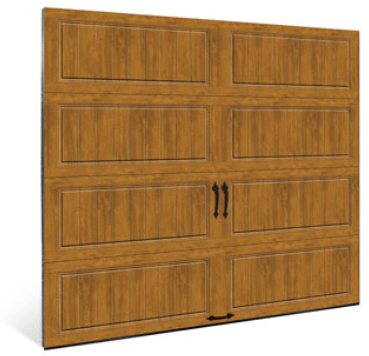
Real wood garage doors have an undeniable visual pull: natural grain, depth of color, custom craftsmanship. In Illinois, though, choosing wood means committing to a higher level of care. The climate will work against an unprotected or poorly maintained wood door relentlessly.
How Real Wood Holds Up Against Illinois Conditions
Wood expands and contracts with temperature and humidity changes. In a climate with Illinois-level seasonal variation, that movement is significant. Repeated expansion and contraction cause panels to warp, crack, or pull away from the frame over time. Gaps that develop allow water infiltration, which accelerates rot and can compromise structural integrity.
Keeping a real wood door in good shape here means refinishing or repainting every one to two years, sealing all edges and joints carefully, and catching small cracks before they become serious. For homeowners willing to invest in that maintenance, real wood can last decades and look beautiful. For those who want something lower effort, wood is not the right direction.
Wood Composite as a Weather-Smart Alternative
Wood composite doors offer a practical middle path. These doors are built with engineered cores and composite facings that mimic real wood grain without absorbing moisture the way solid wood does. They resist warping and cracking through temperature swings and are well-suited to Lake County communities where salt-air exposure compounds the challenge.
For homeowners in areas like Libertyville or Waukegan who want the warmth and character of a wood aesthetic without intensive seasonal maintenance, composite doors are worth a close look. They still require painting and periodic care, but they hold up significantly better to humidity and freeze-thaw cycling than solid wood. One thing to note: fiberglass-faced composite panels can yellow with prolonged sun exposure, so finish selection matters.
If you’re weighing wood composite or another material for your home, our garage door installation services team can walk you through what works best for your neighborhood and home style.
Aluminum, Fiberglass, and Vinyl: Niche Materials Worth Knowing
Aluminum: Rust-Resistant but Challenged by Illinois Cold
Aluminum’s biggest advantage is corrosion resistance. It doesn’t rust, which makes it a reasonable choice in high-moisture zones near the lake or in areas with heavy road salt exposure. Aluminum doors are also lighter than steel, which reduces strain on the opener over time.
The significant downside in Illinois is thermal performance. Aluminum has a low R-value and conducts cold well, making garages frigid in winter. It’s also more susceptible to denting than steel and can become brittle in colder temperatures. For most Chicagoland homeowners with attached garages, steel is the stronger call. Aluminum works best for unheated or detached setups.
Fiberglass: Corrosion-Resistant with a Cold-Weather Limitation
Fiberglass handles moisture well and can closely replicate the look of wood grain. It doesn’t warp or expand with temperature changes. That said, fiberglass is susceptible to cracking in cold weather, and this is a genuine limitation in Illinois winters, not a minor footnote. Impact resistance drops as temperatures fall, which is a real risk given our climate. Fiberglass also yellows with prolonged sun exposure and delivers lower R-values than polyurethane-insulated steel. It’s best suited for unheated garages or milder climates.
Vinyl: Low Maintenance, Limited Options
Vinyl doors offer excellent dent and corrosion resistance and require virtually no painting or finishing. They’re a solid option for unheated or detached garages, particularly where accidental impacts are more likely. The trade-offs are a narrower design range compared to steel or wood, and a low R-value that limits their suitability for heated spaces.
How to Choose the Best Garage Door Material for Your Illinois Home
Use this quick framework to match your situation to the right material:
- Attached or heated garage → prioritize R-12 to R-18; steel with a polyurethane insulation core is the top choice
- Lake County or coastal proximity → prioritize corrosion resistance; wood composite or aluminum
- HOA or historic neighborhood aesthetic requirements → wood composite offers wood appearance with lower maintenance
- Unheated or detached garage → aluminum or vinyl are practical, lower-cost options
- Budget-conscious, low-maintenance priority → steel
Best Garage Door Materials for Illinois: Side-by-Side Comparison
| Material | Durability | Insulation (R-Value) | Maintenance Level | Rust/Corrosion Resistance | Best For Illinois | Price Range |
|---|---|---|---|---|---|---|
| Steel | Very High | High (polyurethane core) | Low | Moderate (requires monitoring) | Most homeowners; attached/heated garages | Budget–Mid |
| Wood | Moderate | High (natural) | High (every 1–2 years) | Poor (rot/mold risk) | Not recommended for IL climate | Premium |
| Wood Composite/Fiberglass | High | Moderate to High | Low | Excellent | Lake County areas; premium aesthetics | Mid–Premium |
| Aluminum | Moderate | Low | Low | Excellent | Unheated/detached garages only | Budget–Mid |
| Fiberglass | Moderate | Low–Moderate | Low | Excellent | Unheated garages; mild-climate use | Mid |
| Vinyl | High | Low | Very Low | Excellent | Unheated/detached garages | Mid |
Ready for a New Garage Door? Contact Overhead Garage Door in Chicagoland
Picking the right material is only part of the equation. Professional installation makes a real difference in how your door performs and how long it lasts. A door that isn’t correctly aligned, sealed, and balanced from day one will show wear faster, regardless of the material.
Why Overhead Garage Door, Inc.
We’ve been serving Chicagoland homeowners since 1981, over 40 years working in Lake County and Greater Chicagoland from our base in Ingleside. Our technicians carry a minimum of five years of industry experience and are background-checked and uniformed before they work in your home. We offer same-day service and 24/7 availability for when you need it most.
Our track record includes an A+ BBB rating and more than 1,000 Angi reviews, including multiple Super Service Award recognitions. We install doors and openers from respected brands including Clopay, Amarr, C.H.I., Wayne Dalton, Haas, Hormann, and LiftMaster Professional.
Get Started Today
If you’re ready to explore what the right replacement garage door looks like for your home, we’re here to help you weigh your material options, match the right door to your style and climate needs, and get everything installed correctly. Contact us to get started.