
If your garage door opener is straining, slowing down, or making noises it never used to make, size might be the culprit. Getting garage door opener size right comes down to matching horsepower to your door’s actual weight and how often it’s used, not guesswork. Below, we walk through exactly how to figure out what size garage door opener you need, and when it’s worth having a technician confirm the fit. If you’d rather skip the math, contact us and we’ll size it for you.
Why Garage Door Opener Size Matters
An opener that’s too small for the door it’s lifting has to work harder on every cycle. Over time, that extra strain shows up as a hotter motor, louder operation, and parts that wear out faster than they should. Go too big, and you’re paying for lifting capacity your door will never use. Sizing a garage door opener correctly protects the motor, keeps the door moving smoothly, and helps the whole system last as long as it’s supposed to.
Key Factors That Determine the Right Opener Size
Several things combine to determine how much horsepower your garage actually needs. The door’s weight and material matter most, but width, drive type, and how often the door cycles each day all play a part too.
Door Weight and Material
Weight is the single biggest factor in garage door opener horsepower needs. A lightweight aluminum or non-insulated steel door asks much less of a motor than a solid wood or insulated steel door of the same size. Material changes the math significantly, which is why two doors that look similar from the driveway can call for very different opener sizes.
Door Size and Type (Single vs. Double Car Garage)
A single door, typically around 9 feet by 7 feet, is naturally lighter and narrower than a standard double door, usually 16 feet by 7 feet. Double doors cover more surface area and almost always weigh more, so they generally need more lifting power. This is a major reason people search specifically for what size garage door opener for a 2-car garage, since the jump from single to double changes the recommendation.
Drive Type and Its Effect on Power Needs
Drive type doesn’t change how much a door weighs, but it does affect how that weight gets lifted. Belt-drive openers use a steel-reinforced rubber belt and run about as quietly as openers get, making them a good fit for garages near bedrooms. Chain-drive openers use a heavy-duty chain that’s durable and budget-friendly, and they hold up well on standard aluminum doors. Whichever drive type you choose, lean toward higher lifting power if you’re dealing with extreme weather, a heavy one-piece door, or a garage that opens and closes constantly throughout the day.
Garage Door Opener Horsepower Explained
HP ratings aren’t arbitrary. Each class corresponds to a general range of door weights and use cases, and knowing those ranges helps a lot when you’re comparing openers.
1/3 HP: Lightweight Single Doors
A 1/3 HP opener suits small single doors weighing up to roughly 125 lbs, though this rating is mostly a holdover from older opener lines. It has largely faded from current lineups, and we don’t recommend it for doors that see frequent use or carry any real weight.
1/2 HP: Standard Single or Light Double Doors
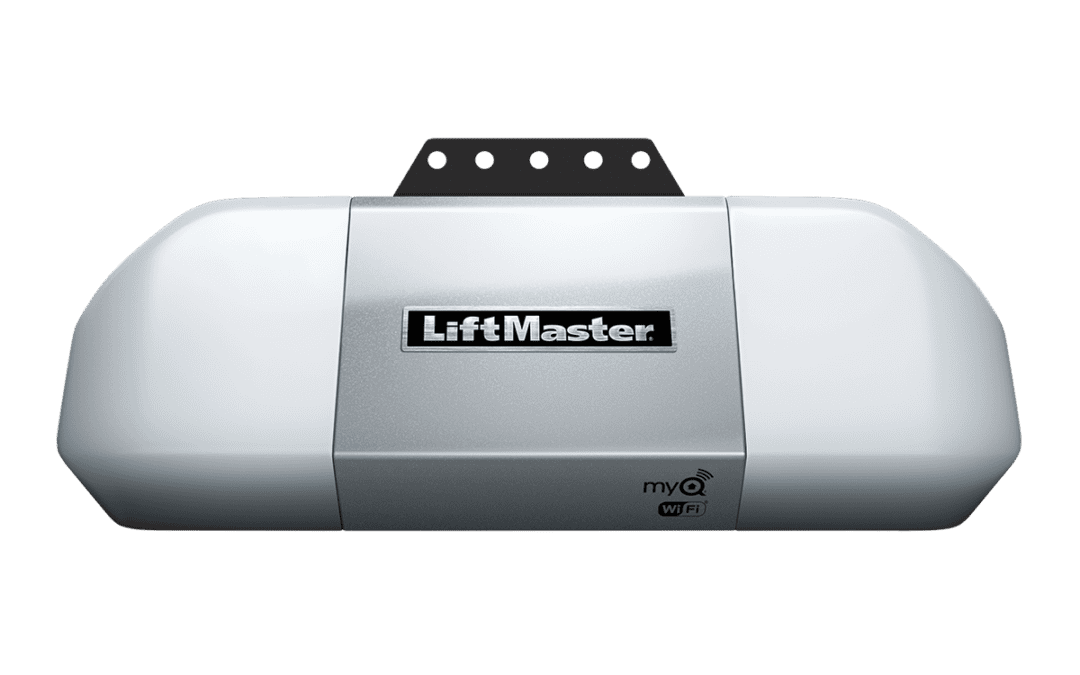
A 1/2 HP opener fits most single doors, whether 8×7 or 9×7, especially when they’re non-insulated or made from lighter steel, generally up to about 150 lbs. The Genie Chain Drive 500, for example, carries a 1/2 HPc rating for doors up to 7 feet high and 350 lbs, while the LiftMaster Premium Series 8355W is a 1/2 HP AC belt-drive opener with Wi-Fi connectivity. For a single door or a light double, 1/2 HP is often plenty.
3/4 HP: Heavier Double-Car Garage Doors
A 3/4 HP opener is the sweet spot for the majority of homes, particularly on standard 16×7 double doors and insulated steel doors up to around 250 lbs. It also runs comfortably on most single doors, well below its maximum capacity, which keeps the motor cooler, quieter, and working less hard over its lifespan. Double doors, especially at 16 feet wide or with added insulation, typically call for this rating.
1 to 1 1/4 HP: Oversized, Insulated, or Custom Doors
For oversized doors like 18×8 or 16×8 insulated models, heavy wood or carriage-house styles in the 250 to 400+ lbs range, RV doors, or garages with high daily cycle counts, a 1 to 1 1/4 HP opener makes sense. Genie’s Model 3142 is rated 1 1/4 HPc for doors up to 7 feet high from the box, or 8 feet with an extension kit, and includes built-in Aladdin Connect for remote monitoring from a smart device without added hardware. The Genie Signature Series 7055D also carries a 1 1/4 HPc rating for doors up to 7 feet high and 500 lbs. Genie’s HPc, or Horsepower Comparable, rating measures performance rather than literal horsepower, so it’s not directly interchangeable with traditional HP figures from other brands.
How to Determine the Right Opener Size for Your Garage
Once you understand the HP classes, sizing your own garage boils down to three practical steps.
Measure or Estimate Your Door’s Weight
A simple DIY check can get you a rough number. Disconnect the opener, lift the door’s bottom edge about a foot off the ground, slide a bathroom scale under one corner, read the number, then double it. This gives you a workable estimate, but it’s a starting point rather than a final answer. Chicagoland winters add moisture and, in some cases, ice buildup that can make a door feel heavier than its dry-weight spec, which is one more reason to have a technician confirm the number before you buy.
Match Weight and Width to HP Recommendations
The core rule in how to size a garage door opener is simple: match horsepower to the door’s weight, not the size of your garage. If your estimate lands between two HP classes, size up. There’s no real downside to a slightly oversized opener, but an undersized one risks motor strain, slower operation, and a shorter lifespan.
Most homeowners don’t know what their door weighs, so match by type first and confirm the weight with your installer:
| Door Weight | Width/Type | Recommended HP | Notes |
|---|---|---|---|
| Up to ~125 lbs | Single, lightweight aluminum or thin steel | 1/3 HP | Increasingly rare in current lineups; fine for light, infrequent use |
| ~125–150 lbs | Single, non-insulated steel (8×7 or 9×7) | 1/2 HP | The residential baseline for standard single doors |
| ~150–250 lbs | Double, insulated steel (16×7) | 3/4 HP | The sweet spot for most double-car garages; runs well below capacity |
| ~250–350 lbs | Double wood, carriage-house, or heavily insulated | 1 HP | Also worth stepping up here for daily multi-cycle use |
| 350 lbs and up | Oversized (18×8), solid wood, or full-view glass | 1¼ HP or higher | Heaviest residential applications |
Factor In Usage Frequency and Smart Features
A door that cycles multiple times a day, common in busy households or homes with attached garages used as a main entrance, benefits from the extra reliability of a 3/4 or 1 HP motor even if the weight alone might suggest a smaller size. Smart features like Wi-Fi connectivity or remote monitoring don’t change the horsepower math, but they’re worth factoring into your overall decision when buying a new garage door opener.
If your current door shows any wear consistent with age or damage, pair opener sizing with a look at the door itself. Our garage door installation team can evaluate both at the same time. And if you’d like a second opinion before committing to a size, get in touch with our team and we’ll walk through the numbers with you.
What Size Opener Do You Need for a 2-Car Garage?
For a standard 16-foot double door, a 1/2 HP opener can work if the door is lightweight and non-insulated, but most two-car garages do better with 3/4 HP. Insulated steel doors, solid wood, or doors that open and close often all push toward the higher end. In a Lake County home with typical insulated steel, 3/4 HP is the more common recommendation, with 1 HP reserved for heavier wood or carriage-style doors.
1/2 HP vs. 3/4 HP: Which One Is Right for You?
The 1/2 vs 3/4 HP decision comes down to weight, width, and use. A 1/2 HP opener suffices for single doors and light double doors that don’t see heavy daily traffic. A 3/4 HP opener handles heavier, wider, insulated, or frequently used doors with more margin, which typically means less strain on the motor and a longer service life. When in doubt between the two, 3/4 HP is the safer long-term choice for most double-car garages.
Signs Your Current Opener Is the Wrong Size
Watch for a motor that strains audibly at the start of each cycle, a door that moves slower than it used to, or an opener that reverses partway through instead of completing its cycle. Overheating is another red flag, often paired with a louder hum than normal. On double doors especially, an underpowered 1/2 HP motor pushed past its limit will wear out faster and can eventually stop lifting the door altogether. If you’re already seeing these symptoms, our garage door repair team can diagnose whether it’s the opener, the door hardware, or both.
Oversizing has its own, smaller downside too. A motor that’s far more powerful than the door requires is an unnecessary expense, and in some cases can put more strain on door panels than they’re built to handle.
Get Expert Help Sizing and Installing Your Garage Door Opener in Chicagoland
Trusted, Local, and Certified
Overhead Garage Door, Inc. has served Chicagoland since 1969. Our technicians, each with a minimum of five years of experience and background checks completed before they’re sent to a job, take care of opener sizing, full installation, and everything in between. We’re an authorized dealer for Clopay, Ideal Door, and LiftMaster, hold membership in good standing with the BBB and the International Door Association, and are EPA lead-safety certified. Our reputation is backed by more than 1,000 Angi reviews, an Angi Super Service Award, and an A+ BBB rating.
Serving Chicagoland and Southeast Wisconsin
We provide same-day and 24/7 emergency service out of our Ingleside, IL base to homes throughout Chicagoland and Southeast Wisconsin, covering Cook, Lake, McHenry, DuPage, Kane, Will, Boone, Winnebago, Kendall, Kenosha, Milwaukee, Racine, and Walworth Counties, including many homes we service throughout Lake County, Barrington, and Lake Zurich.
Ready to Get Started?
If you’d rather not guess at the math, contact us or call our emergency line at 888.459.3720, and we’ll help you land on the right size the first time.