
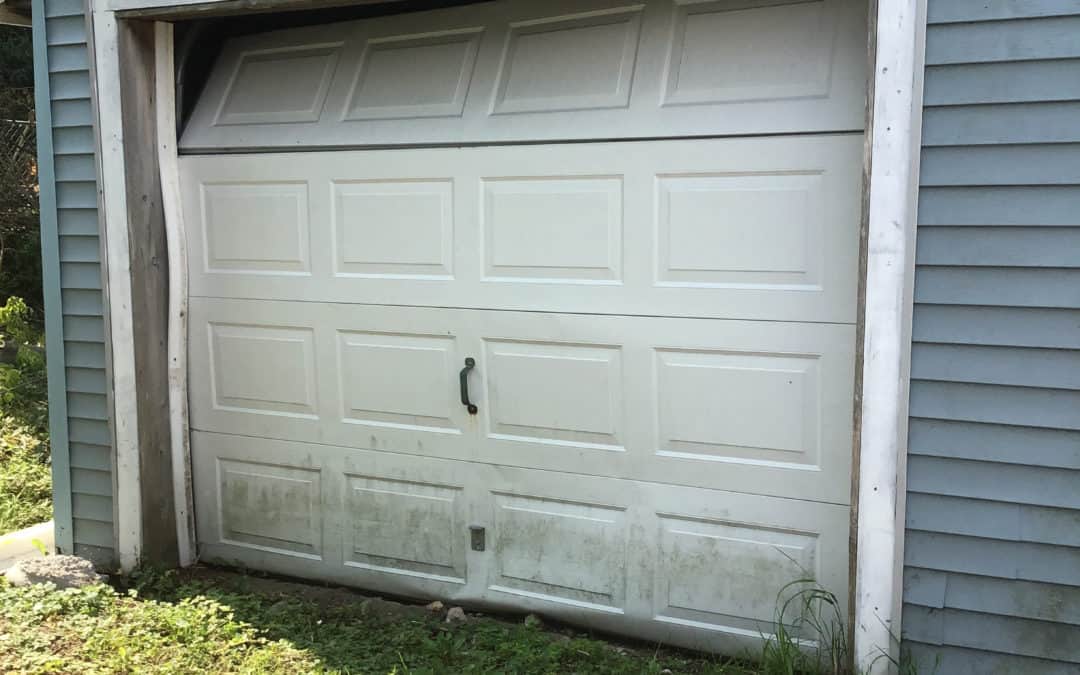
A crooked garage door is hard to ignore. You see daylight at one corner, feel cold air slide in, and start worrying about security, energy bills, and repair costs.
When our experts see a garage door that isn’t level when it’s closed, it almost always points to a deeper issue with springs, cables, or tracks. Luckily, once we detect the true cause, we can get your door closing straight again. This will help you feel confident every time you hit the opener.
Why Your Garage Door Isn’t Level When Closed: Common Culprits
Most people start by searching how to level a crooked garage door and hope for one quick adjustment. In reality, a garage door that’s uneven when closed almost always indicates an underlying problem. Springs, cables, rollers, and tracks have to share the load evenly.
Springs are a common source of trouble. If a torsion or extension spring weakens or breaks on one side, the door sags and may feel heavy or stop partway. The safer move is to call for professional garage door spring replacement, as springs store a significant amount of energy.
Cables are next on the list. Cables wrap around drums at the top and run down each side. If one cable stretches, frays, or slips, the garage door can appear misaligned and it may jerk as it moves.
Tracks and rollers also cause a garage door to close unevenly. A bent or loose track can pull the door off to one side, and worn or seized rollers can bind and make the door drag. Our track repair and replacement service lets a trained tech realign the system safely and correctly.
Sometimes, the problem is with the door or floor, not the hardware. Wood doors can warp from moisture. Older steel doors can twist. Concrete can settle and leave one side higher than the other. In mild cases, a thicker bottom seal can even things out, so the garage door that isn’t closing completely meets the floor. In more serious cases, we talk through new door options.
Warning Signs Your Garage Door Is Not Level
A door doesn’t typically become uneven in one day, and early signs are easy to miss.
Visual Indicators to Look For
Start by looking at the door while it’s closed. Do you see daylight in one corner? Does one side of the bottom seal press tight while the other floats above the floor? That wedge-shaped gap is a classic sign of a garage door isn’t closing evenly.
Then, step inside and look at the hardware. Check that rollers sit at the same height on both sides. Cables that hang loose or aren’t even on the drums point to a crooked garage door because the lift system isn’t balanced.
Performance Issues That Signal Problems
Many homeowners notice movement changes before they notice gaps. A garage door not closing all the way, then reversing, often means the opener is met with extra resistance. That can come from bent track, bad rollers, or an unbalanced door.
Watch the door travel. Does one side lead or lag? You may also hear new grinding, scraping, or popping sounds. Those noises are a sign that a door needs some TLC.
You can do a simple balance test. Pull the emergency release and lift the door by hand to about halfway. If it slams shut or shoots up, the springs are out of balance. This means you have a garage door out of alignment in terms of weight, not just looks.
Safety Concerns and When to Stop Using the Door
A crooked door is more than a cosmetic problem. Stop using the door right away if you see a broken spring, a cable hanging loose, or rollers that have come off the track. Do not try to force the door open or closed. Our 24/7 emergency repair help is a safer answer than a risky DIY attempt.
Pause use if the opener struggles, runs louder than normal, or smells hot. The motor may be fighting a heavy, crooked door. That strain can burn out the opener and still leave you with a garage door not closing evenly, or at all.
When Professional Repair Is Required
Many homeowners search “how to fix a crooked garage door” or “how to fix an uneven garage door” and think it looks simple. There are a few safe steps you can try. You can remove debris from the tracks, carefully clean the sensor lenses, and closely inspect any visible hardware. If that doesn’t work, you should call a professional to fix your garage door.
Anything involving springs, cables, or major track changes belongs in a pro’s hands. Springs and cables store enough energy to cause serious injuries if they snap or slip. Our technicians have at least five years of experience and use specialized tools every day. They know how to fix uneven garage door problems by rebalancing the system, not just masking symptoms.
Professional help also matters for openers. If the door is heavy or crooked, adjusting opener travel or force on your own can hide deeper issues. We can set limits on how much force can be used, test safety reverse features, and realign photo eyes. We can explain how to adjust garage door to close tighter only after the door itself is safe and balanced.
Many people search “how to adjust uneven garage door” or “how to fix uneven garage door” after they see the gap grow year after year. Sometimes, we can add a new bottom seal or adjust the close point. In other cases, a new door with better sealing makes more sense for comfort and security.
If you have a garage door not closing all the way, a door that hangs crooked, or a system that feels unsafe, you do not have to guess. Our technicians can quickly spot the cause, from worn rollers to failing springs. We serve many Chicago and southern Wisconsin communities, and you can see them on our service area page.
Contact Overhead Garage Door Today
If your garage door is not level when closed, we are ready to help. Overhead Garage Door offers same-day and 24-hour response across Chicagoland.
Use the simple form on our contact page to request a visit, or call us if you need faster help. We will talk through what you see, explain how to fix a crooked garage door the right way, and get your system safe, level, and reliable again.