
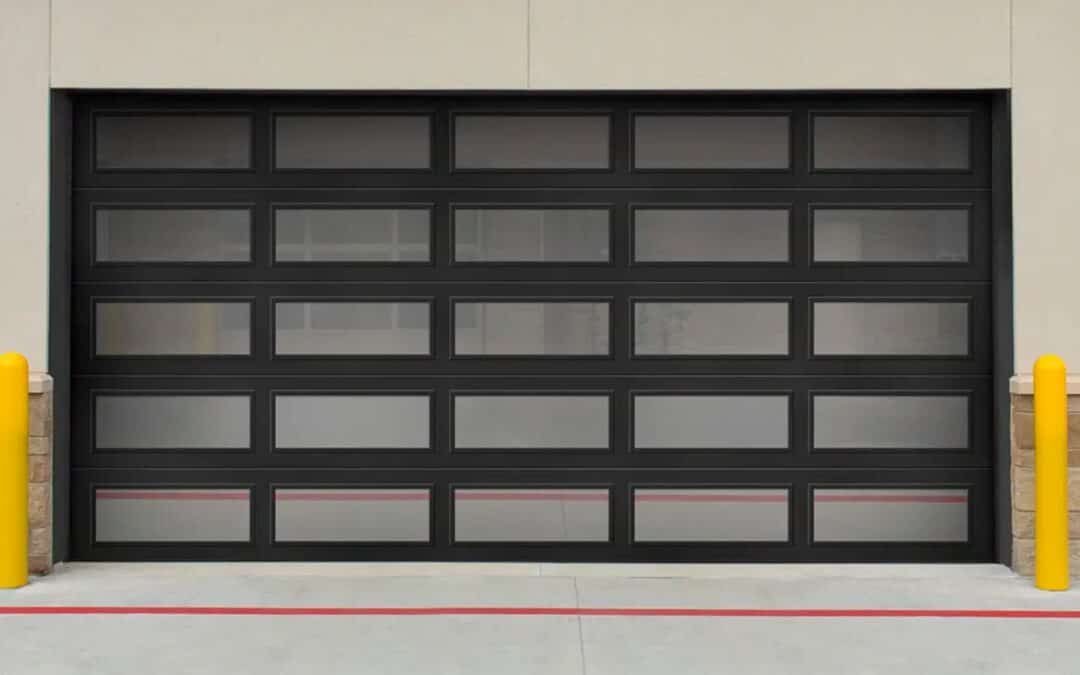
A stuck-open dock door in January does more than annoy your crew. Deliveries stop, labor sits idle, and the heat pours out of your building. Scheduled commercial garage door maintenance costs less than that kind of disruption, and you can measure the difference. Overhead Garage Door, Inc. has served Chicagoland since 1981, and below we show you what to inspect, what to service professionally, and how to estimate your own return. When you’re ready, request a maintenance inspection.
Why Winter Is the Costliest Season for Commercial Overhead Doors
Winter raises the stakes for any door that fails. A door that won’t close lets cold air and moisture into the building and creates security risks. Your actual costs depend on facility conditions and failure history, yet cold weather exposes weaknesses that mild weather hides. That matters for anyone running commercial overhead doors in Chicago.
How Cold Weather Stresses Springs, Openers, Seals, and Tracks
Cold works on every part of a door at once. Lubricants thicken and steel contracts, and rubber seals stiffen and crack. Freezing conditions stress metal springs and electric opener motors. Road salt and moisture wear on hardware.
| Cold-weather effect | Likely consequence |
|---|---|
| Thickened lubricant, contracting steel | Springs carry more strain, openers work harder |
| Stiff, cracked seals | Gaps and drafts, plus a bottom seal that can freeze to the ground |
| Ice and salt residue in tracks and rollers | Binding, uneven travel, a stuck-open dock door or blocked bay |
Never force a frozen door with the opener. Holding the button can strip gears or burn out the motor. If movement is slow or strained, get it diagnosed rather than pushing harder.
What One Door Failure Costs Your Chicagoland Operation
The repair invoice is only part of the bill. A failure’s severity depends on how important the opening is, whether you have alternate access, how long the repair takes, and parts availability. The cost categories include:
-
Idle labor.
-
Delayed shipments and restricted vehicle access.
-
Unsecured openings and temporary security measures.
-
Spoiled or temperature-sensitive goods.
-
Rush service and rescheduling.
-
Heat loss and liability exposure.
If a door fails, our 24/7 emergency garage door repair team can respond. Avoiding the call is still cheaper.
The ROI of Commercial Garage Door Maintenance
Reactive maintenance brings significant downtime and higher long-term costs than a planned program. Scheduled maintenance catches repairs before they become urgent, which means longer equipment life, more efficient operation, fewer unexpected failures and safer doors for your team, all on your schedule instead of the weather’s.
Preventive Maintenance vs. Emergency Repair Costs
Service-call prices only tell part of the story, so look at the full cost. Emergency repairs can involve urgent scheduling, disrupted operations, extra labor, and temporary measures to secure the opening.
| Factor | Preventive maintenance | Emergency repair |
|---|---|---|
| Predictability | High, planned and budgeted | Low, arrives without warning |
| Downtime | Scheduled around operations | Often unplanned and disruptive |
| Parts and labor planning | Parts ordered ahead | Rushed sourcing and urgent labor |
| Safety exposure | Lower likelihood of hazards | Higher, with a compromised door in use |
Hidden Returns: Heat Loss Savings, Longer Door Life, and Lower Liability
Deficient overhead-door seals allow significant air leakage and heat loss in heated warehouses and industrial buildings. The Federal Energy Management Program (FEMP) advises keeping large doors closed and checking and repairing seals, since outside-air leakage can be a major contributor to heating load on the coldest days. Savings vary with weather, indoor temperature, opening frequency, and building condition.
Early detection of worn parts prevents damage to connected components, and correcting friction or alignment problems reduces strain on the operator, extending the life of your most expensive door hardware. Safer operation also reduces your exposure to employee injuries and liability claims, a return that’s harder to measure but just as real.
How to Estimate Your Own Return
Start with this formula: (estimated annual benefits − annual maintenance cost) ÷ annual maintenance cost × 100. Benefits are expected avoided downtime hours × hourly operating cost, plus avoided emergency calls, plus heat savings. Use invoices, downtime logs, and conservative assumptions. Don’t double-count lost productivity and lost revenue from the same interruption.
Here’s an illustrative example for a facility with four dock doors:
| Input | Example |
|---|---|
| Avoided downtime (one dock door stuck for 6 hours) | 6 hours |
| Hourly operating cost (idle crew, delayed shipments) | $500 |
| Avoided emergency call (after-hours premium and rush parts) | $800 |
| Heat savings from repaired seals (season estimate) | $600 |
| Estimated annual benefit | $4,400 |
| Annual maintenance cost (two inspections plus minor repairs) | $1,500 |
| ROI | (4,400 − 1,500) ÷ 1,500 × 100 ≈ 193% |
These figures are illustrative. Your results depend on your door count, traffic, building and failure history.
Plug in your own numbers from invoices and downtime logs, compare results over consistent periods, and adjust for changes in traffic, weather and energy prices. Our commercial maintenance inspection is the best place to start: we’ll document your doors’ condition and help you gather the inputs for a realistic ROI picture.
Winter Commercial Garage Door Maintenance Checklist for Docks and Overhead Doors
Before the first deep freeze, clear track debris and replace worn seals. Then book a professional inspection. Keep personnel away from tensioned components and moving equipment.
| Component | What to check | Warning sign | Who handles it |
|---|---|---|---|
| Springs | Visual look for gaps or corrosion | Gap in spring, loud bang | Technician only |
| Cables | Fraying at drums and ends | Frayed or displaced cable | Technician only |
| Rollers | Wear, smooth travel | Scraping, grinding | Staff clean and lubricate; technician replaces |
| Hinges | Bends, looseness | Bent or loose hinge | Staff lubricate, technician replaces |
| Tracks | Debris, alignment | Distortion, off-track movement | Staff clean, technician realigns |
| Weatherstripping | Cracking, brittleness | Gaps, daylight beneath door | Staff inspect, technician replaces |
| Dock seals | Damage, poor contact | Drafts, water intrusion | Staff inspect, technician repairs |
| Operators | Mounting, strain | Noise, straining | Technician |
| Limit settings | Intended open and close travel | Overdriving, incomplete closure | Technician |
| Photo-eyes | Clean lenses, test with a broom handle | Door fails to respond | Staff test, technician repairs |
| Reversal and safety systems | Auto-reverse test with a piece of wood | Door fails to reverse on contact | Staff test; technician repairs |
Springs, Cables, Rollers, Hinges, and Tracks
Watch a full operating cycle from a safe position: jerking, uneven travel or new vibration points to wear or binding. Your team can clear track debris and lubricate steel rollers and hinges with a silicone or lithium-based lubricant (skip WD-40), while spring and bearing lubrication should be left to a technician during scheduled service. Winding or replacing torsion springs, replacing cables and realigning bent tracks are technician-only jobs.
Weatherstripping, Dock Seals, and Insulation
Check the bottom, side, and header seals for gaps, tears, or brittleness. Replace a worn bottom seal when daylight shows beneath the door, and clear snow and ice from it. Evaluate dock seals and shelters alongside door seals, since the opening works as one weather barrier. Insulation won’t make up for perimeter gaps or doors left open too long. For dock safety, OSHA advises maintaining dockboards, securing portable dockboards, and blocking open dock doors where someone could fall.
Operators, Limit Settings, and Safety Systems
Have qualified personnel verify operator mounting, travel limits, and controls. Test auto-reverse with a piece of wood in the door’s path. The door should reverse on contact. Never bypass a safety device or raise force settings to overcome a mechanical fault. If the test fails, take the door out of normal use and call us. Internal opener gear-box repairs belong to a technician too.
How Often to Service Commercial Doors in Barrington, Lake Zurich, and Lake County
Intervals should follow manufacturer requirements, operating cycles, exposure, equipment condition, and the business cost of failure. Location alone shouldn’t drive the decision. Many of the commercial properties we serve across Lake County have doors that cycle all day, and those need closer attention. We recommend professional inspections twice a year, in early spring and late fall.
Tasks Your Team Can Handle Weekly and Monthly
Give one person clear responsibility, and write findings down so nobody has to rely on memory.
-
Weekly: walk the opening for obstructions and listen for odd noise. Report any visible damage or seal wear.
-
Monthly: take a closer look with trained staff, clean the photo-eye lenses, and run the prescribed safety tests.
-
Any time: clear debris and ice from the opening and seals.
Professional Service Schedules by Door Type and Usage
These are general planning guidelines only. Confirm the right schedule for your equipment.
| Door type and usage | General guidance |
|---|---|
| High-cycle dock doors | More frequent professional visits |
| Rolling steel | Tailored to its components and testing needs |
| Sectional | Tailored to its components and testing needs |
| Low-use | Seasonal check, with a prewinter assessment |
For dock levelers specifically, small to medium businesses usually do well with annual service, and more often when use is continuous. Medium to large businesses should plan on semi-annual visits. Qualified personnel should inspect them through a full operating cycle and record results in writing. Fire-rated doors need specialized inspection under applicable standards, so confirm requirements with qualified professionals and your local authority. From our Ingleside base, we serve Barrington and Lake Zurich and can help establish a regular schedule.
What a Professional Maintenance Visit Includes and When to Call a Technician Now
A visit may take an hour or two unless major issues are present. Our technicians inspect cables, hinges, rollers, springs, tracks, the reversing mechanism, the opener, and visual sensors. Expect written findings that separate immediate safety concerns from near-term repairs. If we find worn components, our garage door repair team can handle them, and if a door is at the end of its life, we can discuss garage door installation.
Stop using the door and call right away for any of these:
-
Door off-track.
-
Frayed cable.
-
Gap in spring.
-
Loud bang.
-
Slow or uneven travel.
-
Reversal failure.
Keep people clear of the opening, and don’t stand beneath, force, or adjust a compromised door. Call for emergency commercial garage door repair. We offer same-day, 24-hour service.
How to Choose a Commercial Garage Door Service Provider in Chicagoland
Whether you search for a commercial overhead door company near me or compare commercial garage door companies near me, judge providers on criteria you can verify:
-
Technician experience with your door types and operators.
-
Background checks for the people entering your site.
-
A genuine 24/7 response commitment that goes beyond advertised availability.
-
Documented inspections with a written scope.
-
Parts availability, since a missing part prolongs downtime.
The lowest visit price rarely reflects total value, so weigh the whole package. We meet these criteria. We’re family-owned and have served Chicagoland since 1981. Our technicians each have at least five years of industry experience, and they undergo background checks and drug tests along with ongoing performance reviews.
Schedule Your Commercial Maintenance Inspection with Overhead Garage Door Today
Book before severe weather so repairs happen without operational pressure. Tell us your door count, equipment types, and approximate cycles, along with any known symptoms, prior service records, and preferred service windows. You’ll get condition findings and prioritized recommendations, plus a schedule suited to your facility. Contact us online or call (847) 546-6600. We’re available 24/7 for emergencies. Visit us at 34691 N Wilson Rd, Ingleside, IL 60041. We hold an A+ BBB rating and the Angi Super Service Award.
FAQs
How often should commercial doors be serviced? We recommend inspections twice a year, in early spring and late fall. High-cycle doors may need more.
What can my staff check? Staff can do visual checks, listen for noise, clear debris and ice, clean photo-eye lenses, lubricate hinges and rollers, and test sensors and auto-reverse.
What needs a technician? Winding or replacing torsion springs, replacing cables, realigning bent tracks, and internal opener gear-box repairs.
Do seals affect winter operating costs? Yes. Worn seals allow air leakage and heat loss, so repairing them helps limit wasted heat. Savings vary by building.
Do you serve Lake Zurich and Barrington? Yes. We serve both, and we offer same-day, 24-hour service.